What It Means When Someone Calls You an NPC
The gaming term for background characters has become one of the internet's sharpest insults. Here is where it came from and what it actually means when someone uses it on you.
From Shopkeeper to Slur
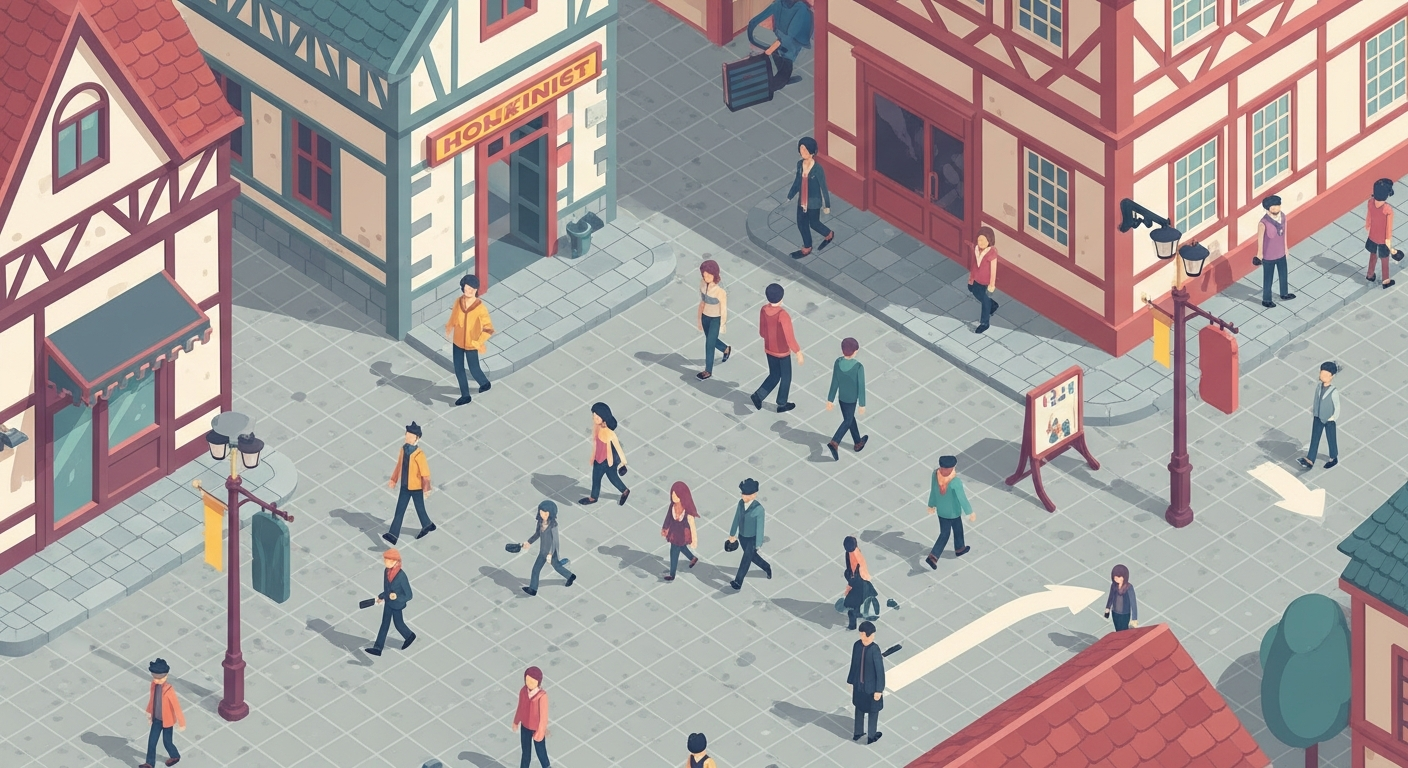
Every video game world is full of them. The blacksmith who says the same three words every time you walk past his forge. The villager who paces the same cobblestone loop all day regardless of what catastrophe is unfolding around her. The crowd member in the background of a cutscene, blinking on a timer, serving no purpose beyond making the world feel slightly less empty.
These are non-player characters, NPCs. Controlled by the game’s code rather than a human being, they exist to fill a role and then stop existing the moment that role is fulfilled. They do not surprise you. They do not grow. They are, by design, hollow.
At some point, the internet decided that description fit certain people too.
What the Insult Actually Claims
When someone calls another person an NPC, the accusation is specific: you are not really thinking. You are running a script. Your opinions were handed to you by some outside force, absorbed uncritically, and now you repeat them on cue the way a game character says “Have you heard about the dragons?” for the thousandth time.
The underlying claim is a denial of genuine interiority. An NPC in a game has no inner life. It has programmed responses. To call a person an NPC is to suggest they are the same, that behind the words there is no actual reasoning, no real engagement with ideas, just conditioned output.
That is a genuinely harsh thing to say about someone. Which is, of course, partly why it caught on.
The term sharpened into a recognizable internet insult around 2018, where it spread quickly in political spaces as a way to mock people seen as robotically parroting media narratives or partisan talking points. A grey, expressionless face became the associated meme image, meant to visualize the blankness the insult implies. From there it escaped any one political context and became a general-purpose dismissal, the kind that works across any argument where one side decides the other is not really engaging in good faith.
Why Gaming Vocabulary Lands So Hard Online
Gaming has been quietly donating vocabulary to broader culture for decades. “Grinding,” “leveling up,” “final boss,” “respawn,” all of these have crossed over into everyday speech. NPC followed that same path, but it carried something the cheerier metaphors did not: a built-in implication of worthlessness.
Part of what makes it sting is that gamers actually do treat NPCs as less than fully real. You rob them, ignore them, run past them, sometimes actively avoid them because their dialogue is irritating. The game does not ask you to care about them. Applying that framing to a human being is not subtle.
The insult also benefits from being immediately legible to anyone with even passing familiarity with games, which in 2026 is most people under fifty. You do not need to explain the concept. The image of a character stuck in a loop, repeating the same line, is something almost everyone has experienced firsthand.
Using It, Receiving It, and What It Reveals
Like most insults that spread far enough, NPC has become a little blunt from overuse. It gets thrown at people for simply disagreeing with the person throwing it, which rather undermines the claim that the target is the one doing unthinking repetition.
Receiving it tends to feel more irritating than wounding, at least once you understand what it means. The accusation is so total, so dismissive of any possible nuance in your thinking, that it tends to provoke frustration rather than self-reflection.
What the label actually reveals, quite often, is the frustration of the person using it. It is the rhetorical move of someone who has decided the conversation is not worth having, and wants a single word to slam the door. Whether that frustration is justified depends entirely on the situation.
The gaming origin is worth keeping in mind. In a video game, the NPC is not the problem. It is doing exactly what the designers intended. The player is the one who decided it was not interesting enough to engage with.
What does NPC mean as an insult?
Calling someone an NPC means you think they lack independent thought, simply repeat whatever they have been told, and move through life on a kind of autopilot, much like a non-player character in a video game exists only to serve a scripted function.
What does NPC stand for?
NPC stands for non-player character, a term from tabletop role-playing games and video games referring to any character not controlled by a human player.
Where did the NPC meme come from?
The NPC meme grew from gaming culture and picked up significant internet momentum around 2018, when it was widely used to mock people seen as mindlessly repeating political or social talking points without personal reflection.
Is calling someone an NPC a serious insult?
It depends on context. Among friends familiar with gaming culture it can be playful teasing. Used politically or toward strangers, it is generally meant to be dismissive and dehumanizing, implying the target has no real inner life or genuine opinions.