FixForce Lets You Keep Playing as a Disembodied Head After You Die
Surgent Studios explains how detachable heads, proximity chat, and collapsing bridges became the heart of their co-op extraction platformer FixForce.
Robot Repairmen, Flying Heads, and Total Chaos
Surgent Studios did not set out to make a game about decapitation. That part happened organically.
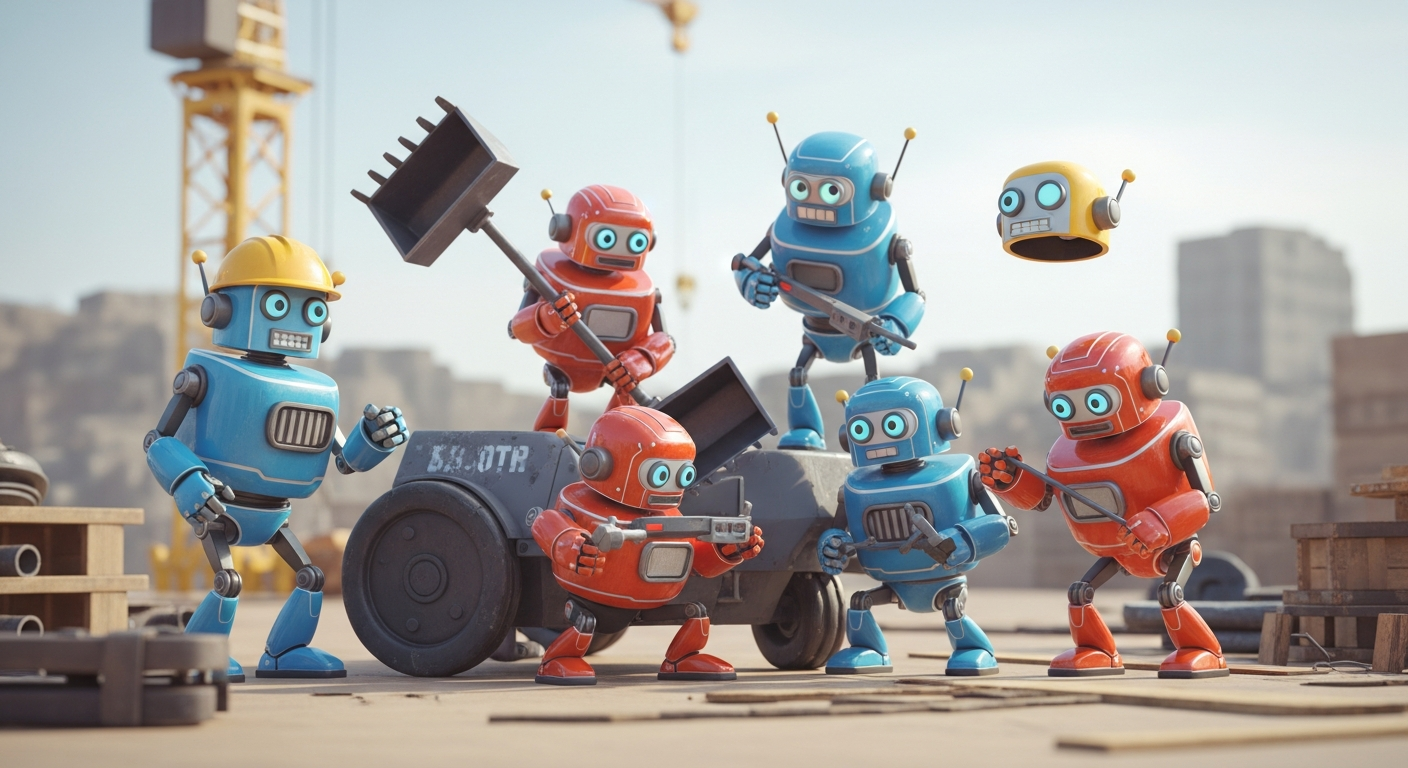
FixForce, the studio’s new co-op extraction platformer, casts up to six players as robot repairmen hustling to hit repair quotas in a post-post-apocalyptic world. Machines need fixing, time is short, and almost nothing goes according to plan. According to a post on Xbox Wire written by Surgent Studios marketing and communications director Dana Thompson, the team figured out pretty early that players were having more fun during the disasters than during the smooth runs.
That insight turned out to be the whole game.
The Detachable Head Arc
The heads-as-gameplay mechanic has a surprisingly modest origin story. As Thompson explains it, detachable heads were originally conceived as a kind of spectator mode, a way to keep eliminated players in the session without much agency. Then the team watched what actually happened in testing.
“Everyone was having a ridiculous amount of fun trash talking each other from their disembodied heads,” Thompson writes. From there, Surgent gave heads movement, letting players scoot, jump, and swim around the level even after their bodies had given out. The real turning point came when the studio let teammates revive each other by literally snapping heads back onto bodies, reframing death as just another mode of play rather than a hard stop.
The practical result is that a team wipeout becomes a branching choice rather than a failure state. If your whole squad goes down, say because someone miscalculated a pallet placement and the bridge your team spent several minutes building folded completely, you can zip around as heads exploring areas only accessible without a body, herd your bodies back to shore, or simply decide that whoever caused the collapse can sort it out themselves. Revenge, Thompson notes, is entirely at the player’s discretion.
Proximity Chat and the Doppler Scream
FixForce also leans hard into proximity chat, which is quickly becoming one of the more underrated tools in co-op game design. Surgent tested a version where all players could hear each other at any distance, but the team found something more interesting when they let audio fall off naturally with range.
The specific moment Thompson highlights is a good one: hearing a friend’s Doppler-shifted shriek of panic as they fall from somewhere above you. At a distance, you can catch fragments of shouted discoveries, someone yelling “I’ve found a toaster!” from across the map. It turns the soundscape into part of the comedy.
To bridge the gap when players are too far apart to communicate verbally, Surgent gave every Fixer a built-in laser pointer. The source material cuts off before fully describing the mechanic, but the intent is clear enough: quick, wordless information sharing in a game where the window between “everything is fine” and “everyone is a head” can be very short.
Why the Chaos Is the Point
What Thompson is describing is a design philosophy that treats friction as a feature. A lot of co-op games work hard to minimize the moments where coordination breaks down. FixForce seems to be engineering those breakdowns on purpose and then giving players enough tools, detachable heads, proximity audio, laser pointers, to stay engaged and keep laughing through the mess.
Surgent Studios is publishing FixForce under the ID@Xbox program. The game supports up to six players in co-op, which means there are potentially five other people to blame when the bridge comes down.
What is FixForce?
FixForce is a co-op extraction platformer from Surgent Studios in which up to six players take on the role of robot repairmen trying to meet quotas in a post-post-apocalyptic world.
What happens when you die in FixForce?
When a player dies their character becomes a disembodied head that can still scoot, jump, and swim around the level. Teammates can revive them by snapping the head back onto a body.
Does FixForce have proximity chat?
Yes. Proximity chat is a core feature, and the audio falls off with distance, meaning you can hear distant teammates shouting things like 'I've found a toaster!' as their voices carry across the map.