
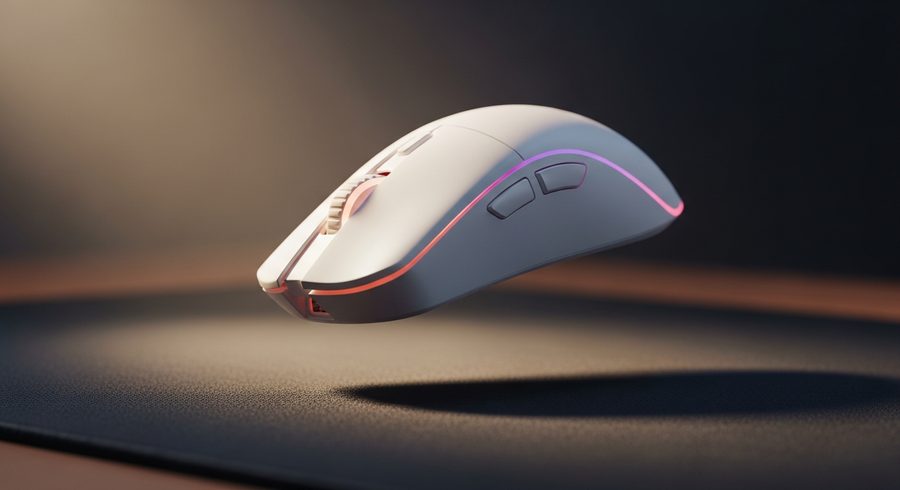
Logitech's Pro X2 Superstrike Ditches the Click Switch for a Magnet
Logitech's $180 Pro X2 Superstrike replaces the mechanical mouse switch with a magnetic, adjustable trigger borrowed from keyboards. Here's what that actually buys you.
Gaming mice have spent years competing on numbers that stopped mattering. Sensor accuracy is effectively solved. Weight has bottomed out. Polling rates climbed past the point of diminishing returns. So it is genuinely notable when a flagship changes something structural, and Logitech’s Pro X2 Superstrike does exactly that: it throws out the mechanical click switch entirely.
The mouse launched at $179.99 and started shipping on February 10. That price tells you who it is for before we get to a single feature.
The switch is the story
Every mouse you have ever used registers a click with a tiny mechanical switch under the button. It is a proven design and also a fixed one. The click happens where the switch says it happens, and that is that.
Logitech’s Haptic Inductive Trigger System replaces that switch with a magnetic sensing approach borrowed from the world of analog keyboards. Because there is no physical contact point deciding when a click counts, the mouse can let you choose. You get 10 actuation steps and five rapid-reset levels across 0.6mm of travel, plus adjustable click haptics so you can tune how the click actually feels under your finger.
The headline benefit Logitech is selling is speed. The company claims the system cuts click latency by up to 30 milliseconds compared to a traditional switch. In a game where duels are decided by who registers a shot first, that is a meaningful number on paper.
The rest of the spec sheet
The Superstrike is not a one-trick mouse. It runs Logitech’s Hero 2 sensor, rated up to 44,000 DPI with 888 IPS tracking and 88G acceleration. Those figures are far beyond what any human hand can exploit, which has been true of flagship sensors for a while now, but they mean the tracking will never be the weak link.
It supports an 8,000Hz polling rate, weighs 61 grams, connects over Logitech’s Lightspeed wireless, and rates up to 90 hours of battery life. That combination, lightweight body, top-tier sensor, high polling, and long battery, is the standard checklist for a modern competitive mouse. The Superstrike clears all of it and then adds the trigger system on top.
Who this is actually for
This is where honesty helps more than hype. For the overwhelming majority of players, a well-reviewed mouse in the $60 to $90 range will track every bit as accurately and feel great doing it. The Superstrike’s sensor advantage over a good mid-range mouse is, in practice, nothing you will feel.
The real question is whether adjustable actuation and lower click latency are worth $180 to you. If you play competitive shooters at a high level and you are the kind of player who will genuinely sit down and tune actuation points per button, the Superstrike offers something no mechanical mouse can. You can set a hair-trigger click for one game and a firmer, more deliberate press for another. That flexibility is real, and it is new.
If you are not going to touch those settings, you are paying a premium for a feature you will leave on default. There is no shame in that, but it makes the value proposition much harder to justify.
The bigger shift
What makes the Superstrike worth writing about isn’t whether it is the right mouse for you. It is what it signals. Magnetic and Hall-effect switches have been quietly taking over keyboards for a couple of years, precisely because adjustable actuation turns out to be genuinely useful once you have it. Logitech bringing that idea to a flagship mouse suggests the same shift is coming to the rest of the category.
Expect competitors to answer. The first generation of any new switch technology tends to be expensive and aimed at enthusiasts, and prices come down as the approach proves itself and scales. The Superstrike is the proof-of-concept at the top of the market. The version most people actually buy is probably a year or two out, and it will cost a lot less.
For now, this is a fascinating, expensive mouse that does one real thing no rival does. Whether that thing matters is entirely a question of how you play.
How much does the Logitech Pro X2 Superstrike cost?
It launched at $179.99 and started shipping on February 10, 2026. That places it at the premium end of competitive gaming mice.
What is the Haptic Inductive Trigger System?
It replaces the traditional mechanical click switch with a magnetic sensing system. You can tune where the click registers across 10 actuation steps, set a rapid-reset point, and adjust the haptic feedback of the click itself.
Is it worth it over a normal gaming mouse?
For most players, a good $60 to $90 mouse tracks just as accurately. The Superstrike's appeal is adjustable actuation and lower click latency, which mainly benefits high-level competitive players who will actually tune those settings.