
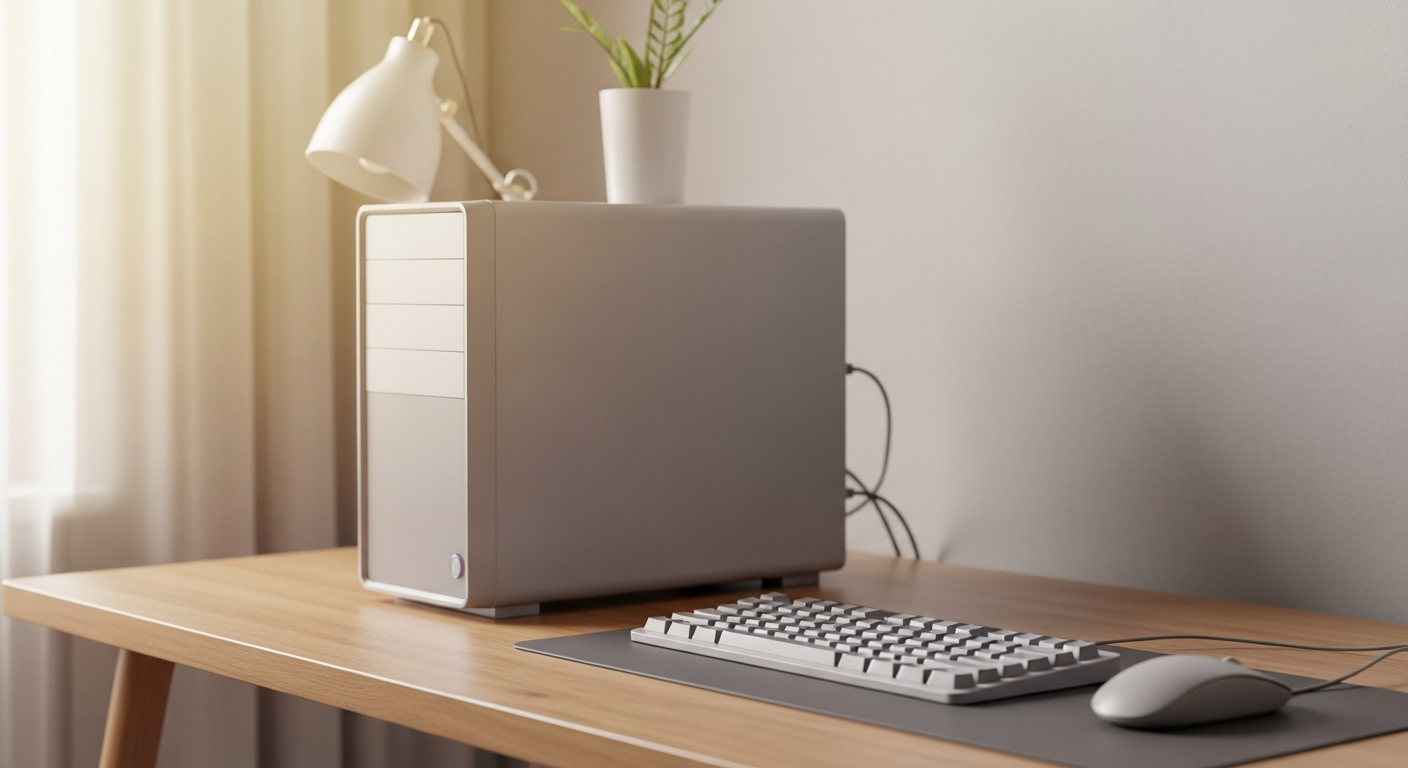
Linus Tech Tips Calls Valve's Steam Machine His Best Desktop PC Ever
The popular tech creator says SteamOS turned him from a Linux skeptic into someone questioning whether he can ever go back to Windows. His praise centers on software polish, not gaming performance.
From Couch Gaming to Daily Driver
For years, Valve’s Steam Machine has been evaluated primarily as a living room gaming box, a compact PC you park under a TV and play with a controller. Linus Sebastian, the creator behind Linus Tech Tips, spent weeks using it differently: as his main desktop computer. The verdict, shared in a new video reported on by Dexerto, surprised even him.
“Maybe the best desktop PC that I’ve ever used,” Sebastian said, according to the report. He described the combination of Valve’s hardware design and SteamOS as “the closest thing that I have ever experienced to a PC Mac Mini,” a comparison that carries real weight coming from someone who has handled more computer hardware than most people will ever see.
He was careful to note what the Steam Machine is not. It is not the fastest desktop on the market. He also criticized its high price. But those caveats did not stop him from making a genuinely striking claim: “It’s made me go from, ‘Well, I’d like to like Linux,’ to ‘I don’t know how I can go back to Windows.’”
Why SteamOS Is Doing the Heavy Lifting
The argument Sebastian makes is less about the physical hardware and more about the software holding everything together. According to Dexerto’s coverage, he praised SteamOS for its interface, simple settings menus, window management, application installation process, and overall responsiveness, specifically calling out how it avoids the frustrations he typically associates with Windows.
Valve built SteamOS on a foundation of Arch Linux, KDE Plasma, and Flatpak, technologies that have existed separately for years but have historically required patience and technical comfort to use well. Sebastian’s point is that Valve has done the integration work most people were unwilling to do themselves, producing something that feels coherent rather than assembled.
For a creator whose audience includes a massive number of PC builders and enthusiasts, that framing matters. He is not saying Linux is suddenly easy. He is saying Valve made a specific version of it that is.
The Couch Gaming Footnote
There is a bit of irony in where this story lands. Valve built the Steam Machine around a gaming identity, with a controller-friendly UI and a library tied directly to Steam. Sebastian’s verdict, though, treats that as almost secondary. “It’s perfectly okay for couch gaming,” he said, according to Dexerto. “It’s just that in my opinion, as a desktop PC or as a workstation, it’s a way better product.”
That sentiment puts Valve in an interesting position. The company clearly designed the Steam Machine to compete in the living room, and earlier reporting from Dexerto noted that Sebastian had previously expressed disappointment that the device was not priced more like a console. But his extended daily use revealed strengths that the product’s own marketing may not have emphasized.
Sebastian also dropped a knowing reference to one of the longest-running jokes in PC culture, declaring, as Dexerto reported, that “the year of the Linux desktop is 2026.” The phrase has been recycled optimistically for roughly two decades by Linux advocates watching mainstream adoption fail to materialize. Coming from someone with Sebastian’s platform and his history of measured, hardware-focused skepticism, the callback reads less like a punchline and more like a genuine concession.
Whether the Steam Machine converts everyday Windows users at scale is a separate question. But a prominent creator publicly wrestling with whether he can return to Windows after weeks on SteamOS is the kind of real-world friction that tends to stick in people’s minds longer than benchmark scores do.
What did Linus Tech Tips say about the Valve Steam Machine?
According to Linus Sebastian, the Steam Machine has become his favorite desktop PC he has ever used, citing its thoughtful hardware design and the polished experience of SteamOS as its biggest strengths.
Did Linus Tech Tips praise the Steam Machine for gaming?
Not primarily. He called it perfectly fine for couch gaming, but argued its real strength is as a desktop workstation, comparing the overall experience to using an Apple Mac Mini on the PC side.
What operating system does the Valve Steam Machine run?
The Steam Machine runs SteamOS, which Valve built on top of Arch Linux, incorporating KDE Plasma and Flatpak into a unified experience.
Did Linus Sebastian have any criticisms of the Steam Machine?
Yes. He acknowledged the system is not the fastest desktop available and criticized its high price, even while praising the overall experience.