The $1,400 MouthPad lets tongue-controlled gaming go mainstream
Augmental's second-gen MouthPad is now on sale in the US, offering people with mobility challenges a Bluetooth trackpad built into the roof of their mouth that can run WASD controls and match brain-computer interface accuracy scores.
A trackpad on the roof of your mouth
For most people, gaming peripherals are a matter of preference. Mechanical switches or membrane, wired or wireless. For players with significant mobility challenges, the calculus is completely different. Augmental, a startup born out of MIT, is betting that a small Bluetooth mouthpiece can close that gap in a meaningful way.
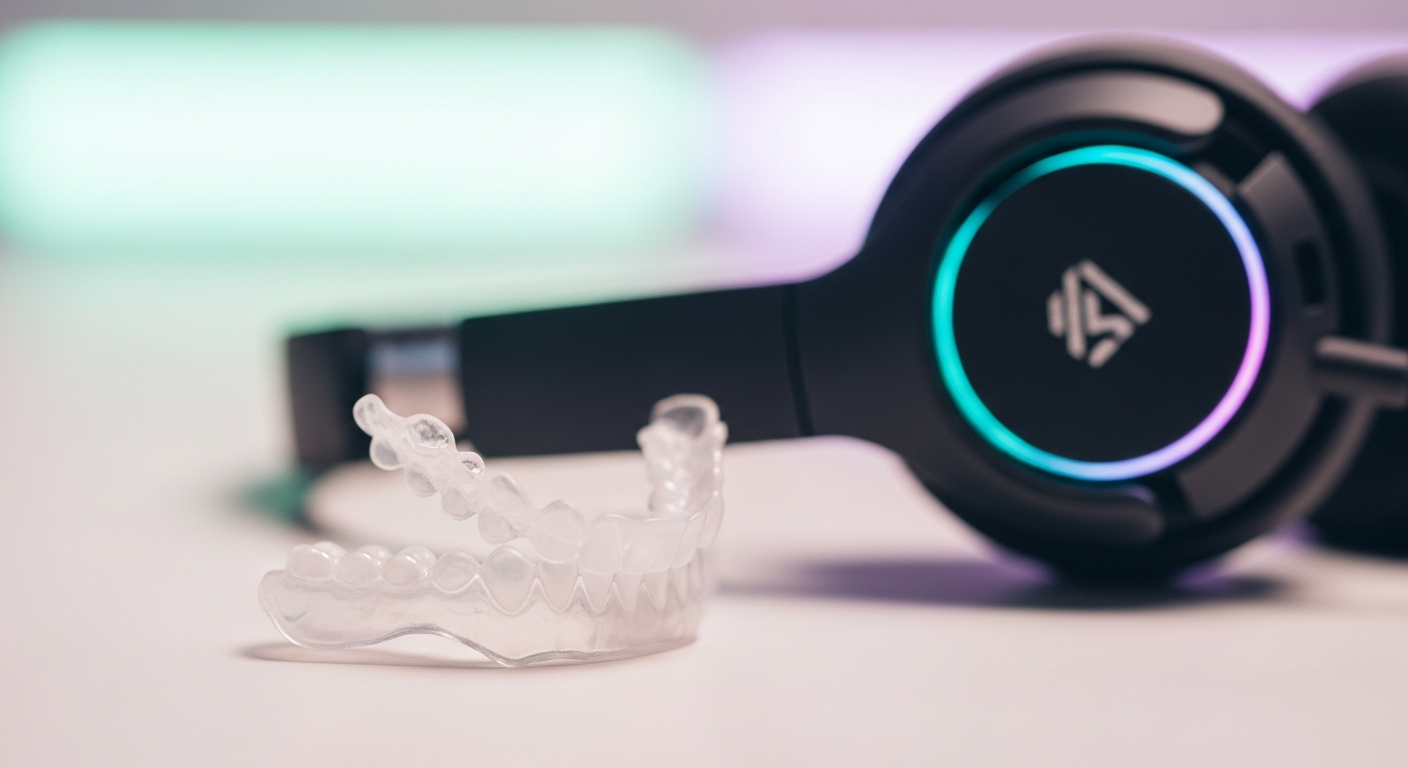
The MouthPad, now available across the US for $1,400, lets users control a phone, tablet, or computer entirely through tongue movements. The second-generation model weighs just 7.5 grams and holds a charge for over seven hours. Users navigate by pressing their tongue against a trackpad positioned on the roof of the mouth, tilting their head, or sipping to click and drag. For gaming specifically, the updated version remaps to WASD controls.
Co-founder Tomas Vega first put the concept together during his final semester at MIT back in 2019, describing the prototype at the time as “a lollipop with a bunch of sensors.” The gap between that description and a refined, shipping consumer product says a lot about how much work went into the intervening years.
RockyNoHands helped shape the device
Among the early access users who tested and influenced the MouthPad’s development is RockyNoHands, the quadriplegic streamer who has spent years demonstrating that adaptive controllers are competitive tools, not just accommodations. He has long used similar technology to hold his own in Call of Duty lobbies, and his involvement with Augmental gives the product real credibility in gaming circles.
Also among the early testers is screener analyst Tomas Baptista, who scored 10.47 bits per second in a cursor accuracy test. Augmental says that figure matches the output of today’s implanted brain-computer interfaces. The difference being that the MouthPad requires no surgery and no neurology bill.
“I game better, work faster, and life’s just easier,” Baptista said, according to the Dexerto report. “But best of all, when I use my computer, I no longer feel like my limitations hold me back.”
Augmental released a video showing the device in action, with users navigating Maps, editing video, playing Mario Kart, and running Call of Duty matches using nothing but mouth mechanics.
The peripheral rights conversation is already messy
The timing of this launch drops into a gaming community that has a complicated, and sometimes ugly, relationship with adaptive technology. Earlier this year, Arc Raiders players were wrongly banned for using peripherals similar in concept to the MouthPad. That episode highlighted how enforcement systems built around detecting “unusual” input can catch legitimate accessibility tools in the crossfire, punishing exactly the players they should be protecting.
RockyNoHands has been a visible figure in that ongoing debate for years, and his presence as both a MouthPad tester and a streamer who regularly fields those conversations gives the device an organic connection to the community most affected.
At $1,400, the MouthPad is not cheap. That price will be a genuine barrier for many of the people who could benefit most from it. But Augmental’s pitch is that the cost sits well below anything requiring a medical procedure, and the performance data they are presenting suggests the device punches well above its weight class. Whether broader insurance coverage or future pricing changes can bring that number down remains an open question, but right now, someone can order one, fit it in their mouth, and play Call of Duty without touching a controller.
What is the Augmental MouthPad?
The MouthPad is a $1,400 mouth-worn device made by startup Augmental that lets users control computers, phones, and tablets with tongue movements. It connects over Bluetooth, weighs 7.5 grams, and lasts over seven hours on a charge.
Can the MouthPad be used for gaming?
Yes. The second-generation model remaps to WASD controls for gaming. Early access user RockyNoHands, a well-known quadriplegic streamer, helped shape the device and has used similar technology to compete in Call of Duty lobbies.
How accurate is the MouthPad compared to brain-computer interfaces?
According to Augmental, screener analyst Tomas Baptista scored 10.47 bits per second in a cursor accuracy test using the MouthPad, a figure the company says matches the output of current implanted brain-computer interfaces, without surgery.
Where did the MouthPad originate?
Co-founder Tomas Vega built the first prototype during his final semester at MIT in 2019, describing it at the time as 'a lollipop with a bunch of sensors.' The more polished second-generation version went on sale in the US in 2026.