
Blueberry Lets You Help a Child Navigate Her Parents' Pain
MELLOW Games director Mel Taylor opens up about the deeply personal origins of Blueberry, a platformer built around traumatic memory, a 'blues bar,' and the emotional life of a child caught between struggling parents.
A Director’s Difficult Childhood, Turned Into a Game
Mel Taylor has a lot they want you to understand about the child inside you. As Game Director at MELLOW Games, Taylor wrote candidly on Xbox Wire this week about the origins of Blueberry, a platformer that draws directly from their own upbringing. Growing up in a large family where, as Taylor describes it, every moment felt chaotic and unpredictable, the experience left lasting marks. Depression, anxiety, suicidal thoughts, and self-harm are all named plainly in the post. So is the long road afterward: leaving home, self-searching, therapy, and arriving at something Taylor calls “reasonably normal.”
That kind of honesty is rare in game development writing, and it sets the tone for everything Blueberry seems to be reaching for.
“Blueberry is not about me,” Taylor writes, “but it contains a lot of personal themes and anecdotes, as well as unpacking major questions about hope and dread.”
The Story Starts at the End of a Life
The game opens not with a child but with an old woman. The titular Blueberry is elderly when players first meet her, estranged from her son Emilio and wondering how things got this way. That question pulls her backward into memory, and backward is where the real game begins.
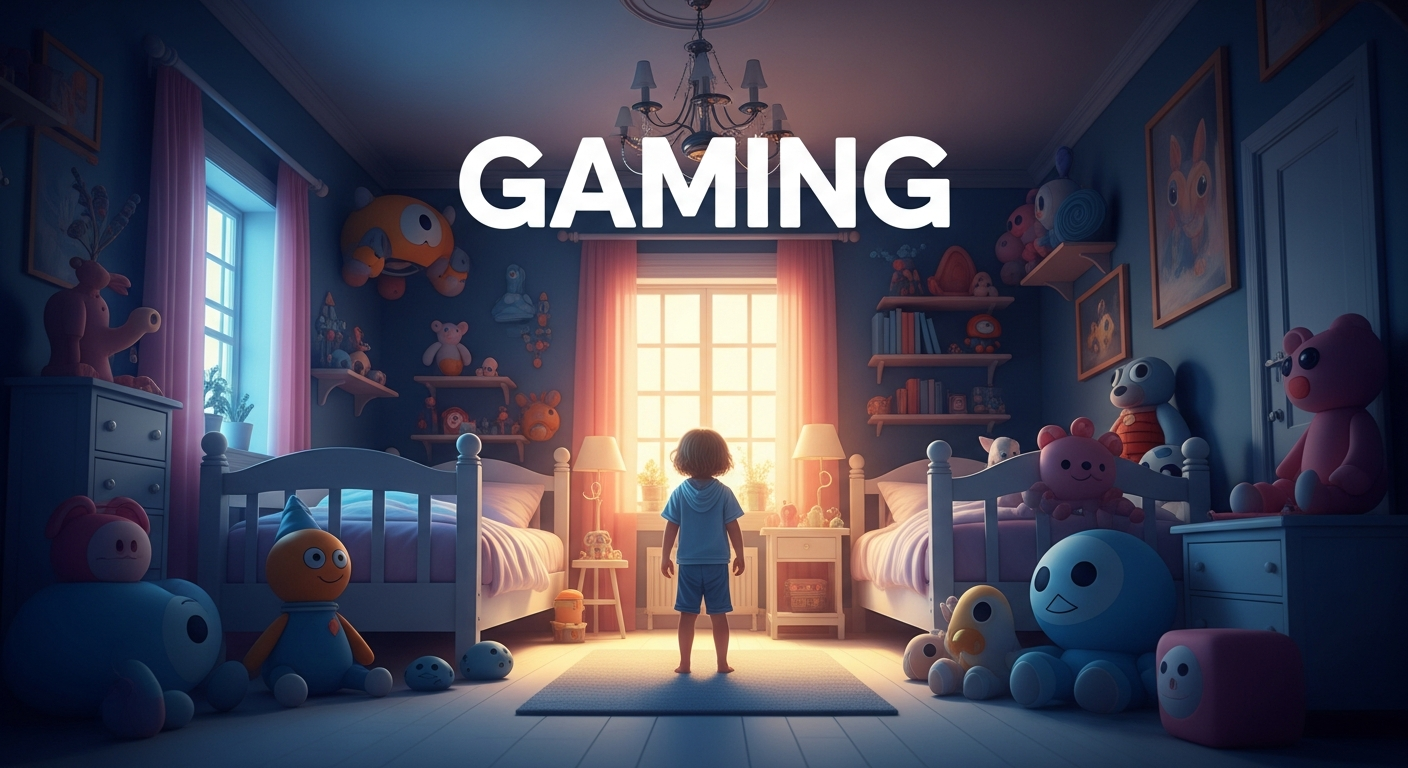
Young Blueberry’s world is bright and strange, filled with talking toys and platforming levels that lean into a kind of heightened childhood logic. But the warmth has cracks in it. Her parents are struggling, and Blueberry is caught in the middle, trying to manage their emotions while her own quietly pile up.
The dialog choices players make shape how that pressure accumulates. Depending on what you say and do, Blueberry can become overwhelmed. That sense of a child absorbing adult instability rather than being shielded from it is, according to Taylor, very much the point.
Color as a Measure of Emotional Weight
The most distinctive mechanical idea in Blueberry is what Taylor calls the “blues bar.” Think of it as the opposite of a health bar. It rises as emotional weight builds, and the goal is to keep it low. As it climbs, the colorful world around young Blueberry literally drains. Blues replace everything else, leaching the vibrancy out of what had been a warm, imaginative space.
It is a clean visual metaphor for something that is genuinely hard to articulate: the way prolonged emotional stress quietly flattens a child’s experience of the world. You are not losing hit points. You are watching joy become inaccessible.
The mechanic also ties the game’s tone to its central concern about memory. Blueberry is not just a story about a difficult childhood. It is, as Taylor frames it, about understanding why those memories exist and what purpose they serve. That framing reflects real therapeutic thinking: traumatic memories are not simply wounds to be avoided or sealed off. They carry information. They explain how a person became who they are.
Why This Kind of Game Matters
Games that engage seriously with childhood trauma and family dysfunction are still relatively uncommon, and ones built directly from a developer’s own experience even more so. Taylor’s willingness to name specific struggles, from self-harm to suicidal thoughts, without softening the language, gives Blueberry a grounding that distinguishes it from games that gesture at dark themes without fully committing.
The premise Taylor puts at the center of the project is simple and genuinely affecting: inside all of us is a child that just wants love and protection. Blueberry lets you walk alongside that child, make choices on her behalf, and watch the world around her respond.
The game was featured under the ID@Xbox banner, placing it within Microsoft’s independently developed titles program. For players who grew up in households that felt a little too much like Blueberry’s, the blues bar may feel less like a game mechanic and more like something they already know by heart.
What is Blueberry about?
Blueberry follows an elderly woman named Blueberry who, facing estrangement from her son, revisits her childhood memories. The game casts players as the young Blueberry navigating a colorful world of talking toys and platforming levels while managing the emotional turmoil of her struggling parents.
What is the 'blues bar' mechanic in Blueberry?
The blues bar functions like an inverted health bar. As it rises, the colorful world around Blueberry drains of color and turns blue. Players try to keep it low by managing their dialog choices and emotional responses throughout the game.
Who made Blueberry?
Blueberry was made by MELLOW Games, with Mel Taylor serving as Game Director. Taylor wrote about the game's development on Xbox Wire, describing how their own difficult childhood informed the game's themes.
Is Blueberry connected to Xbox Game Pass?
The article was published under the ID@Xbox category on Xbox Wire, which covers independently developed titles connected to the Xbox ecosystem. No specific Game Pass availability was confirmed in the source material.